How the example starting rent of $2,450 was chosen
Illustrative example. Not market data or a Nmbr customer result.
$2,450 / month
C is the closest match. Higher-priced alternatives are renovated.
- Asking range
- $2,350-$2,600
- Median
- $2,450
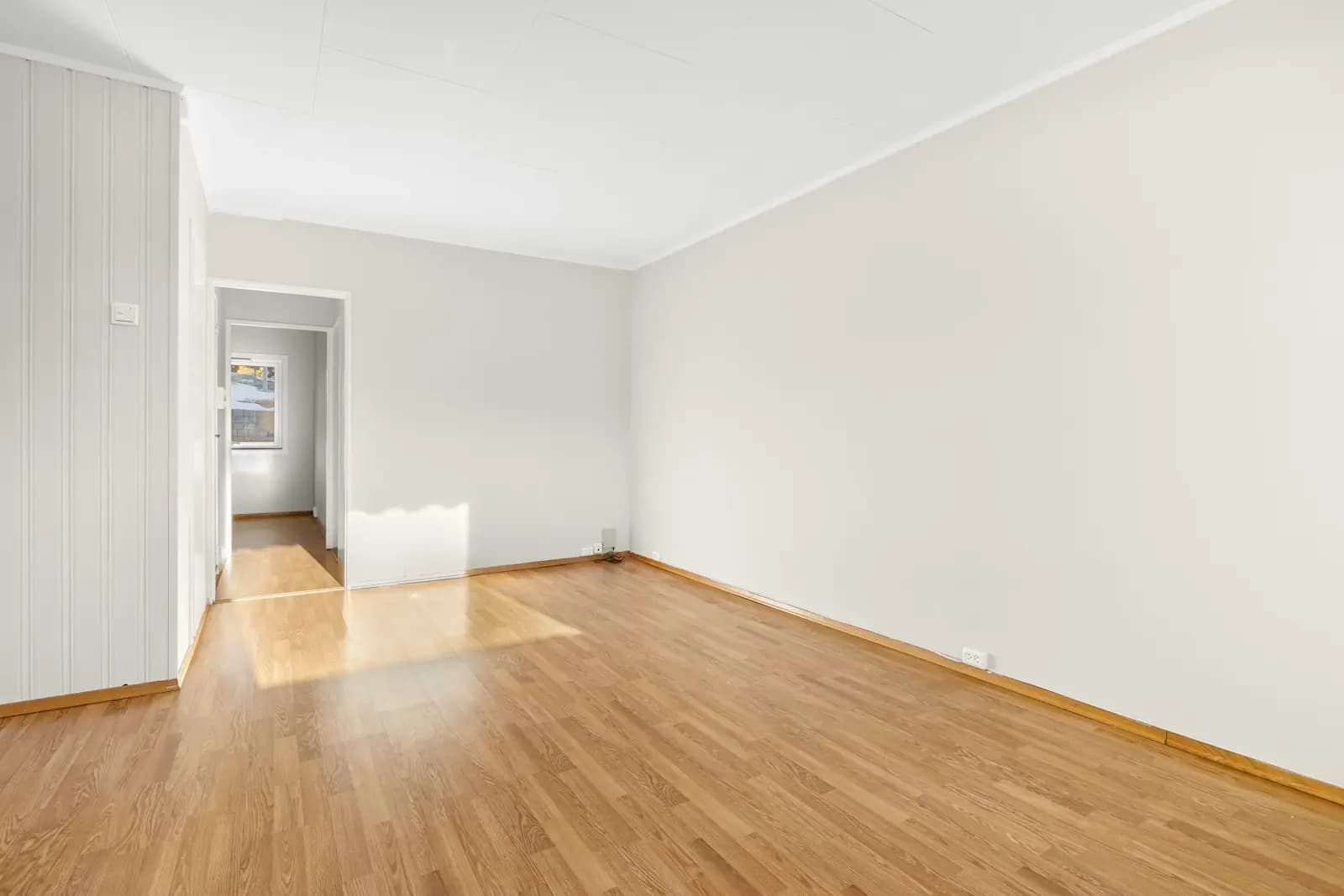
Your example property: 2 beds, 1 bath, about 1,000 sq ft. Standard condition, in-unit laundry, one parking space.
What makes these rentals comparable?
All five hypothetical alternatives share the neighborhood, availability window, and 12-month lease term. Assume similar size, unfurnished homes, tenant-paid utilities, no required monthly fees, and no concessions.
A furnished short-term rental with utilities included belongs in a separate comparison set. Keep a cheaper, otherwise similar rental in the comparison even when it challenges your preferred price.
| Comparable rental | Monthly base rent | Difference from your property |
|---|---|---|
| A | $2,350 | Shared laundry instead of in-unit laundry |
| B | $2,400 | No parking space |
| C | $2,450 | Closest match on the stated features |
| D | $2,500 | Recently updated kitchen |
| E | $2,600 | Renovated throughout |
The median supports the choice; the closest match explains it. $2,450 is a starting hypothesis, not proof of what a tenant will pay. This is the same hypothetical property shown in the three pricing choices above.
Set your own asking rent in five steps
- Find comparable rentals. Match location, property type, beds, baths, approximate size, condition, and availability. Aim for 5-10 useful comps when available; this is a working checklist, not a statistical accuracy threshold. Start with where rentals are advertised.
- Record the full terms. Save each listing link, the date you checked it, rent, fees, utilities, concessions, and lease length. Count the same unit advertised on multiple sites only once.
- Choose a supported starting price. Identify the closest matches and explain the differences. Do not invent a fixed dollar premium for a feature without local evidence. Better photos communicate condition; they do not create an automatic rent premium.
- Check the vacancy trade-off. Compare two prices using the same time horizon and explicit vacancy assumptions. The example below shows when a higher price stops paying.
- Review actual response. Track inquiries, showings, and applications alongside exposure. Check where renters drop out before changing the price. A removed listing is not proof of a signed lease or its final rent.
If you have reliable recent signed-rent information, record it separately from asking rents. Neither an asking price nor an automated estimate is a guaranteed result.
Compare fees and concessions, not just headline rent
A $2,450 base rent with a required $100 monthly fee costs $2,550 per month before other charges. That is not the same recurring cost as $2,450 with no required monthly fees.
Zillow's price-display guidance separates base rent plus fixed required monthly fees from variable and optional charges. Keep usage-based utilities and optional services identifiable. Record refundable deposits separately from rent.
A free month changes the comparison too. In a hypothetical 12-month lease, $2,450 base rent with one base-rent-free month averages:
$2,450 x 11 / 12 = $2,245.83 per month
That is the average base rent over the lease, not necessarily the monthly bill. Required fees and incentive conditions still matter. Compare both the advertised base rent and the concession-adjusted cost.
Before publishing a price: check applicable local rent limits, fee disclosures, and lease requirements. This guide covers a new asking-rent decision; it does not authorize an increase for an existing tenant.
Is an extra $150 a month worth waiting for?
Illustrative example. Not a forecast of rental demand.
20 extra vacant days
At $2,600 instead of $2,450, the price advantage disappears at about 40 total vacant days versus 20.
Compare the same 365 days from the date the property is ready. This base-rent-only model assumes one initial vacancy, unchanged rent, and full collection. It excludes fees, concessions, and costs; it is not net profit.
| Monthly base rent | Assumed initial vacancy | Approximate base rent over the 365 days |
|---|---|---|
| $2,350 | 15 days | $27,041 |
| $2,450 | 20 days | $27,789 |
| $2,600 | 40 days | $27,781 |
| $2,600 | 45 days | $27,353 |
These are specific vacancy assumptions within the three scenario ranges above. If both prices lease after 20 days, $2,600 produces more base rent than $2,450. If $2,600 takes 45 days, it produces less. The missing input is how renters will actually respond, not the arithmetic.
See the calculation and assumptions
Base rent over the period = 12 x monthly base rent x (365 - vacant days) / 365
This simplified model spreads annual rent evenly across days. It assumes one initial vacancy, unchanged rent after move-in, full collection, and no further vacancy. It excludes concessions, fees, maintenance, financing, taxes, and other costs. It is not net profit or a lease proration rule.
Both options use the same start date, rather than counting a fresh 12-month lease after each tenant moves in.
For the break-even calculation:
Higher-price vacant days = 365 - (lower rent / higher rent) x (365 - lower-price vacant days)
With $2,450 after 20 vacant days versus $2,600, the result is 39.90 total vacant days, or 19.90 additional days. Change the assumptions before applying this example to your property.
Which sources should you use to estimate rent?
Use these sources for different inputs into the same pricing decision, not as an accuracy ranking.
| Source | What it contributes | What you still need to check |
|---|---|---|
| Active comparable listings | Current alternatives a renter can choose | Whether features, fees, terms, and availability really match |
| Zillow Rent Zestimate | A property-level starting estimate and range | Home details, range uncertainty, and current close comps |
| Rentometer | Statistics and comparable advertised asking rents | Sample relevance and the difference between asking and signed rents |
Zillow describes Rent Zestimate as a starting point, using home characteristics, public data, and comparable rentals. Its range helps express uncertainty.
Rentometer describes its data as primarily advertised asking rents. Those can differ from agreed lease rents; its research does not make the pricing decision for you.
When sources disagree, inspect the properties and terms behind them. Do not average unrelated estimates simply to get one number.
No inquiries? Check the bottleneck before cutting rent
| What you see | Check first | What to do next |
|---|---|---|
| Few views | Publication, search filters, availability, lead photo, and asking price | Correct visibility and verify the price against close comps |
| Views but few inquiries | Total cost, photos, description, and competing value | Fix missing information; reconsider price if close alternatives offer better value |
| Inquiries but few showings | Reply delays, questions, and showing availability | Improve follow-up and scheduling |
| Showings but few applications | Actual condition, terms, total cost, and repeated objections | Address the mismatch; reassess price if value objections persist |
Hold when supported pricing is producing showings or applications. Reconsider the price when comparable alternatives offer better value and presentation or follow-up problems do not explain the gap. Consider a higher asking price only when comparable evidence and demand support it, within applicable rules and commitments to applicants.
There is no universal number of views or vacant days that proves a pricing problem. Use a meaningful period of exposure for your local market and keep notes on what changed.
If presentation is the issue, start with these rental listing description examples. If inquiries stall, review the steps to move renters toward a showing and application.
Set the price. Let Nmbr help with the leasing work.
Nmbr is a US AI leasing agent for independent landlords. Get help with pricing, publishing, and renter replies, without managing every next step yourself.
Start with your property address or an existing listing link.
- You share the property. Add its details, photos, terms, and availability.
- Nmbr helps run the listing. Pricing and presentation, publishing, replies, pre-screening, and showing and lease coordination.
- You make the final decisions. Set the price, approve the tenant, and sign.
For long-term residential rentals. Not property management or a guarantee of rent or rental date.
Leasing service: $499 one time per listing. See what is included.
Frequently asked questions
Can I get a rent estimate by address?
Yes. Enter your address or Zillow property link above to open a listing draft in Nmbr chat. Confirm the property details and ask for pricing scenarios and their assumptions. This is a guided analysis, not an instant appraisal; the example on this page is illustrative, and the chat presentation may differ.
What if there are very few comparable rentals?
Expand the area or time window carefully and note what becomes less comparable. Keep property types and lease terms distinguishable. For an unusual home, consider local professional input rather than presenting a thin sample as a precise estimate.
Should I charge 1% of my property's value?
A percentage of purchase price is not evidence of local rental demand. Use comparable rental prices to choose an asking range. Use property value and ownership costs separately to assess whether renting meets your financial goals.
Should my rent cover my mortgage and expenses?
That is an ownership-budget question, not proof of what a tenant will pay. Compare the supported rent with vacancy and expenses. If the numbers do not work, reconsider the rental plan rather than assuming a higher asking price will solve it.
Is HUD Fair Market Rent the price I should advertise?
Not automatically. HUD Fair Market Rents are area-level benchmarks used in housing programs. They are not a property-specific recommendation for your advertised price. Check the applicable program requirements when relevant.
Who makes the final pricing decision with Nmbr?
You do. Nmbr helps analyze pricing and prepare and run the listing process. You retain the final pricing decision, approve the tenant, and sign.
Prepared by Nmbr. Sources reviewed September 5, 2026. Examples are illustrative and are not an appraisal, market survey, or legal advice. HUD Fair Market Rent reference.
See the full guide on how to rent out your house